

INCOTERMS
The correct choice of Incoterms conditions is key to successful international trade, so we offer information and consultations to ensure the efficient and safe delivery of your cargo.
Incoterms are internationally recognized trade terms developed by the International Chamber of Commerce (ICC) that define the rights and obligations of the seller and buyer in international goods shipments. They create a unified standard for determining responsibilities and costs.
The Incoterms 2020 rules came into effect on January 1, 2020. This is the latest edition of Incoterms 2020, which should be referenced.
You can learn more about the current Incoterms from our Guide.
This term is often used in initial price quotations for the sale of goods without including any costs. EXW means that the seller makes the goods available at their premises or another specified location (factory, plant, warehouse, etc.). The seller is not required to load the goods onto any transport for shipment or to clear the goods for export.
The term FCA can have two different meanings, each implying different levels of risk and costs for the buyer and seller. FCA (a) is used when the seller delivers the goods, cleared for export, to a specified location that is their own premises. FCA (b) is used when the seller delivers the goods, cleared for export, to a specified location that is not their own premises. In both cases, the goods can be delivered to a carrier appointed by the buyer or another party designated by the buyer.
Under CPT terms, the seller pays for transporting the goods to the specified destination.
These terms are similar to CPT, with the exception that the seller must provide minimum insurance for the goods during transit.
In this case, the seller is considered to have delivered the goods when they are made available to the buyer on the arriving means of transport and ready for unloading at the specified destination. Under DAP terms, the seller must manage all risks associated with bringing the goods to the destination.
According to these Incoterms, the seller must deliver the goods unloaded at the specified place. The seller pays all transportation costs (export fees, carriage, unloading from the main carrier at the destination port, and destination port charges) and assumes all risks until arrival at the destination.
The seller is responsible for delivering the goods to the specified location in the buyer’s country and pays all costs associated with transporting the goods to the destination, including import duty and taxes. The seller is not responsible for unloading.
The goods are considered delivered by the seller when they are placed alongside the vessel (e.g., on the quay or on a barge) designated by the buyer at the specified port of shipment. The risk of loss or damage to the goods transfers from the seller to the buyer when the goods are placed alongside the vessel, and from that point on, the buyer is responsible for all costs.
The seller delivers the goods on board the vessel designated by the buyer at the specified port of shipment or procures the goods already delivered on board the vessel. The risk of loss or damage to the goods transfers from the seller to the buyer when the goods are on board the vessel, and from that point on, the buyer is responsible for all costs.
The seller delivers the goods on board the vessel. The risk of loss or damage to the goods transfers from the seller to the buyer when the goods are on board the vessel. The seller must contract for and pay all costs and freight necessary to bring the goods to the specified port of destination.
The same as CFR, but with the addition that the seller must also provide minimum insurance coverage against the risk of loss or damage to the goods during transit.
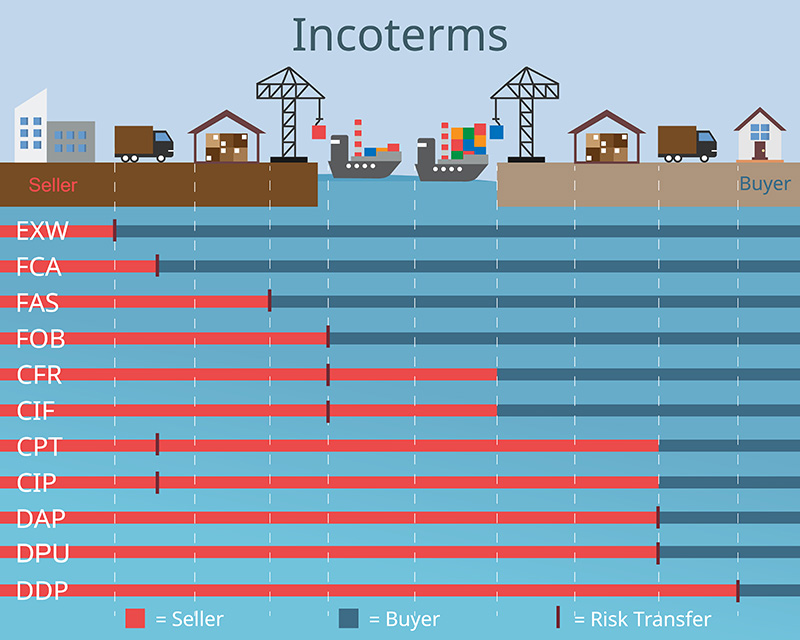
This chart provides a general overview, and when using specific Incoterms agreements, it is important to clearly define all responsibilities of the parties, including transport costs, liabilities, and insurance that may arise during the execution of the agreement.
Our specialists are ready to assist you with any questions regarding Incoterms, selecting optimal delivery terms, and other transport and forwarding services. Contact us for detailed consultation and support in international logistics.